
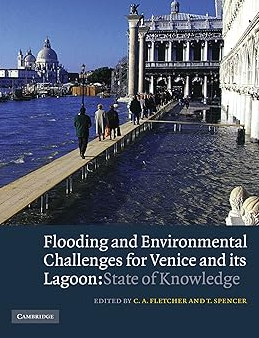
Flooding and Environmental Challenges for Venice and its Lagoon, 2005
Following a series of research workshops the year before, in 2003 Venice in Peril Fund under its then Chairman Anna Somers Cocks organised a four-day International Discussion Meeting on the lagoon of Venice, with the collaboration of Churchill College, Cambridge and CORILA.
The aim of the project was to gather the work of scholars and experts in a cross-disciplinary effort to exchange knowledge and assess the environmental challenges facing Venice and its lagoon, in an international dimension.
Venice was utilised as a case study where the forefront of knowledge was examined and compared with different lagoon/estuarine systems from around the world. The unique nature of Venice’s topography makes it an excellent scientific/engineering case study for sustainable and technical development issues, attracting international experts to share their knowledge and expertise.
This scholarly and technical book was published following the project in 2005 by Cambridge University Press. Still available in print.
At the 2003 International Discussion Meeting, it was decided by the 120 hydrologists and engineers, all but one in agreement, that Venice absolutely needed barriers. The barriers have now been completed and have proven effective when raised at the right time (since being fully operative in 2020, they have been raised 100 times).
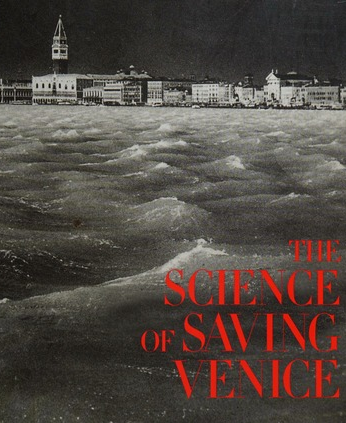
The Science of Saving Venice, 2004
Caroline Fletcher and Jane da Mosto wrote this layman’s introduction to the issues facing the lagoon, drawing on the expertise gathered during the Cambridge research project. It remains a useful companion guide.
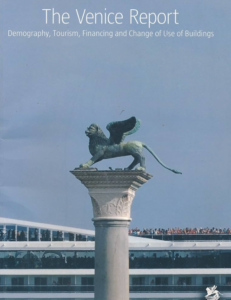
The Venice Report, Demography, Tourism, Financing and Change of Use of Buildings, 2009
Published in 2009 following research commissioned by Venice in Peril Fund and carried out by Cambridge University Architecture Department. It examines the issues of pollution, tourism management, depopulation and employment, and presents the data in an accessible way
| Cookie | Duration | Description |
|---|---|---|
| cookielawinfo-checbox-analytics | 11 months | This cookie is set by GDPR Cookie Consent plugin. The cookie is used to store the user consent for the cookies in the category "Analytics". |
| cookielawinfo-checbox-functional | 11 months | The cookie is set by GDPR cookie consent to record the user consent for the cookies in the category "Functional". |
| cookielawinfo-checbox-others | 11 months | This cookie is set by GDPR Cookie Consent plugin. The cookie is used to store the user consent for the cookies in the category "Other. |
| cookielawinfo-checkbox-necessary | 11 months | This cookie is set by GDPR Cookie Consent plugin. The cookies is used to store the user consent for the cookies in the category "Necessary". |
| cookielawinfo-checkbox-performance | 11 months | This cookie is set by GDPR Cookie Consent plugin. The cookie is used to store the user consent for the cookies in the category "Performance". |
| viewed_cookie_policy | 11 months | The cookie is set by the GDPR Cookie Consent plugin and is used to store whether or not user has consented to the use of cookies. It does not store any personal data. |